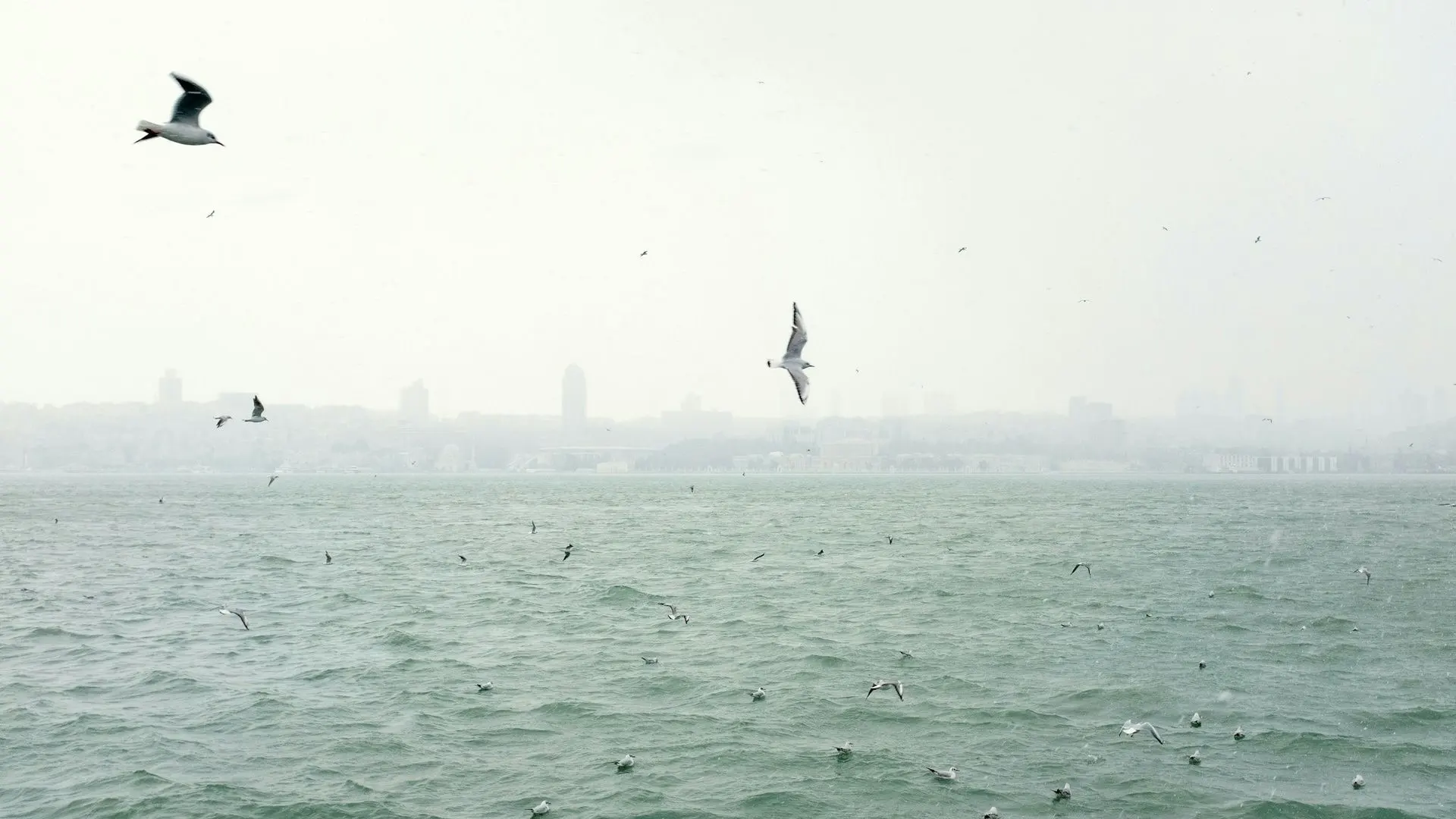
Winter is Turkey's quiet season, and that is its appeal. Istanbul has its museums and ferries to itself, Cappadocia wears snow on the fairy chimneys, the ski resorts at Uludağ, Erciyes and Palandöken open, and the Mediterranean coast stays mild enough for long walks in the sun. What it is not is a beach holiday — the sea is cool everywhere.
Turkey in winter: temperatures, region by region
Between December and February Turkey splits in two. The Anatolian plateau — Cappadocia, Kayseri, Erzurum — turns properly cold and snowy; the coasts stay mild and green, with more rain than frost. The figures below are long-term averages, not a forecast: a cold spell can whiten Istanbul for a few days, and a sunny week on the Mediterranean can feel like spring.
| Region | December (high / low) | January–February (high / low) | Snow | Best for |
|---|---|---|---|---|
| Istanbul | 12° / 7° | 10° / 4° | Some winters, rarely for long | Museums, ferries, hammams, New Year's Eve |
| Cappadocia | 6° / −1° | 5° / −3° | Regularly, on the valleys | Snowy valleys, balloons, cave hotels |
| Antalya & the Mediterranean | 17° / 8° | 15° / 6° | Not on the coast; on the Taurus peaks | Mild sun, old town, coastal walks |
| İzmir & the Aegean | 14° / 8° | 13° / 6° | Rarely | Ephesus without crowds, Pamukkale |
| Trabzon & the Black Sea | 13° / 7° | 11° / 5° | In the mountains (Uzungöl, Ayder) | Snowy plateaus and lakes |
Source: Turkish State Meteorological Service (MGM) long-term normals — İstanbul 1950–2025 · Nevşehir 1959–2025 · Antalya 1930–2025 · İzmir 1938–2025 · Trabzon 1927–2025. Mean daily high / low in °C.
Istanbul in winter: the city to yourself
Istanbul in January and February is cool and damp: daytime highs around 10°C, rain on roughly every other day, and grey skies more often than not. Some winters bring snow, which rarely lasts but can slow the whole city for a day — allow extra time for airport runs when it is forecast.
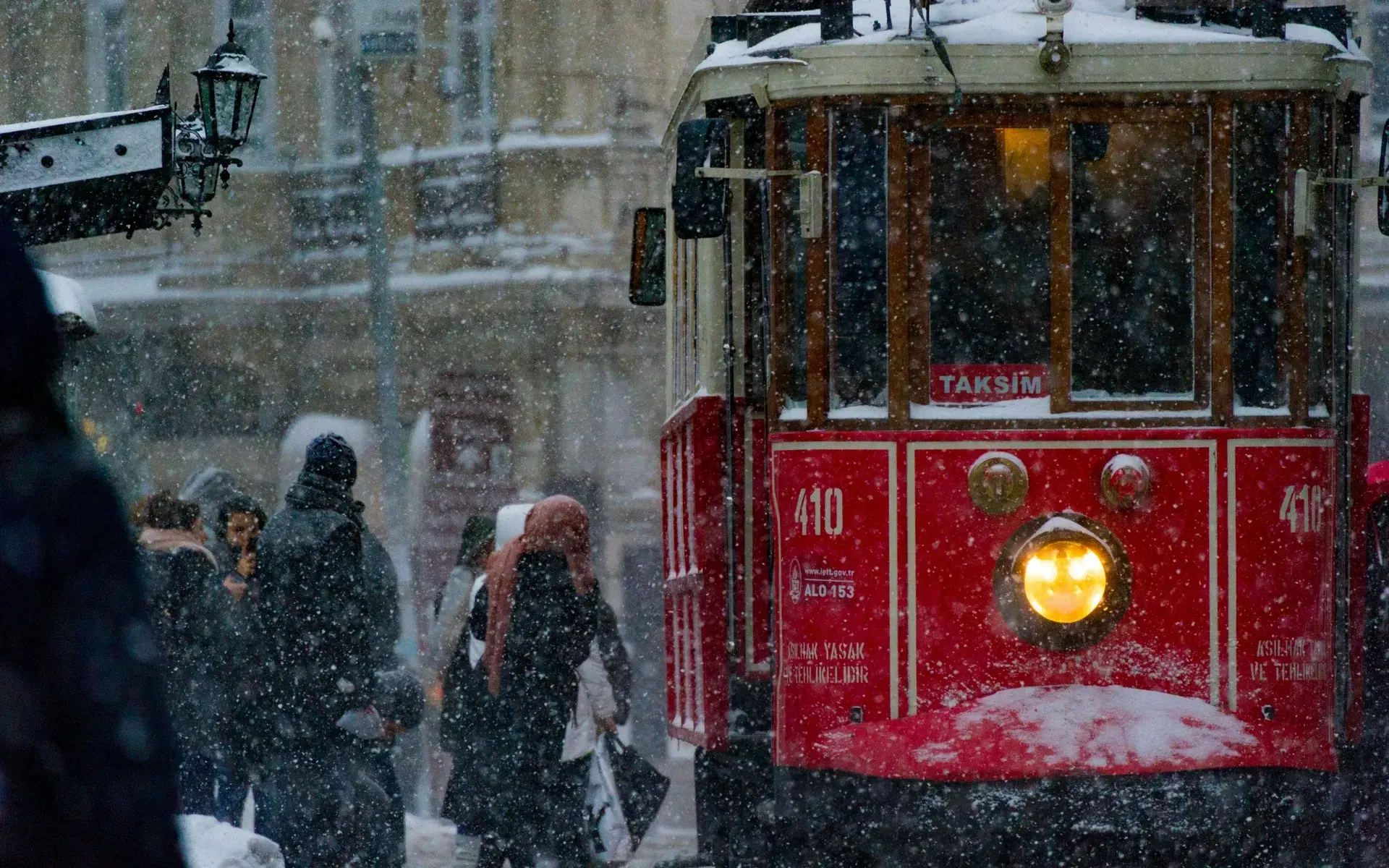
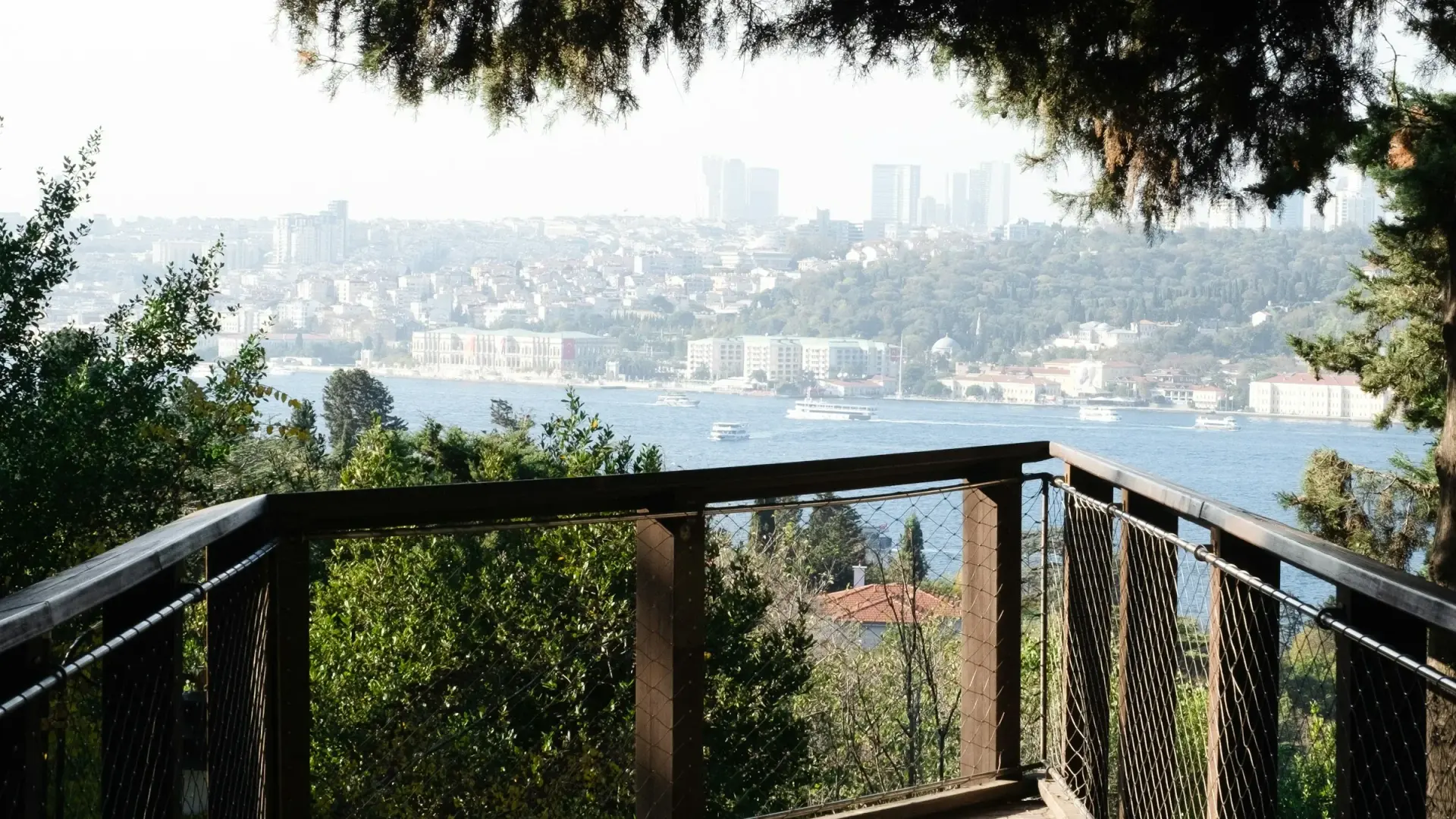
The reward is space. Queues at the big museums are shorter, a Bosphorus ferry is a warm seat with tea and simit rather than a crush, and winter is the season for hammams, salep and boza. New Year's Eve is the one crowded night — our winter and New Year guide covers where to watch it.
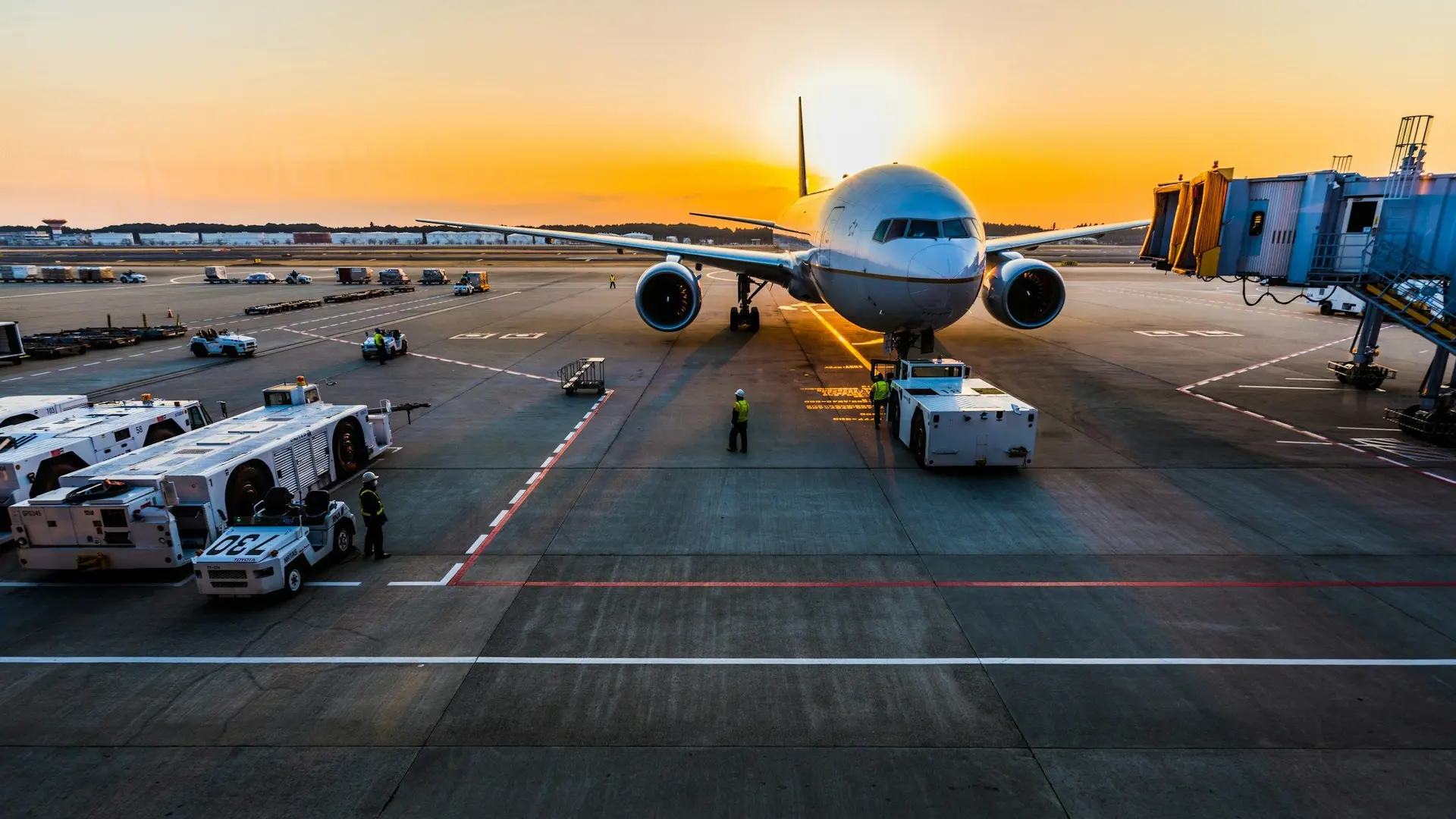
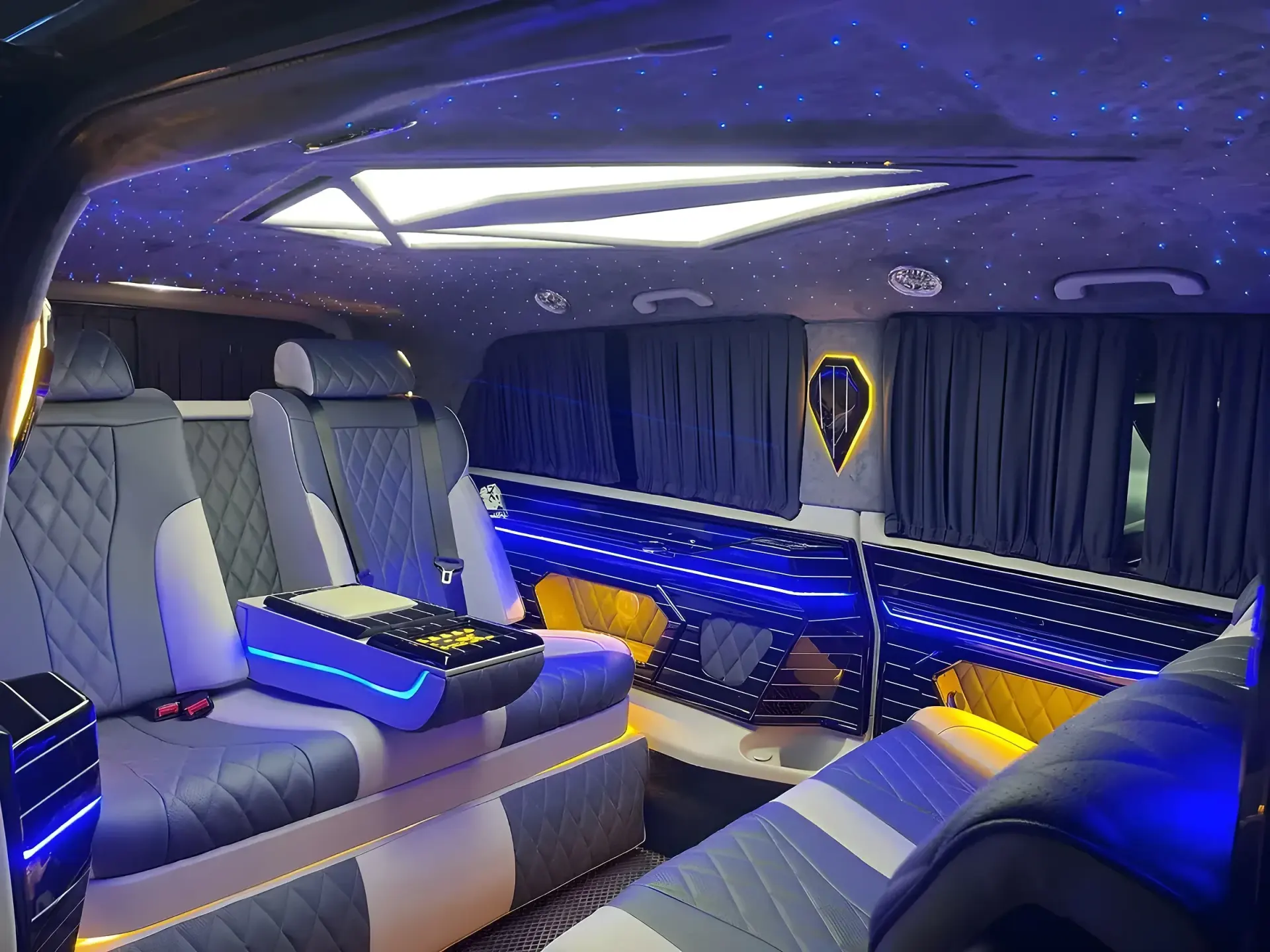
Days are short: Turkey keeps UTC+3 all year, so in December and January the sun rises after 8 a.m. in Istanbul and sets around half past five. A fixed-price transfer from Istanbul Airport to Taksim is €46.99 per vehicle, the same in January as in July.
Istanbul in winter and New Year's Eve · Where to stay in Istanbul
Cappadocia in winter: snow on the fairy chimneys
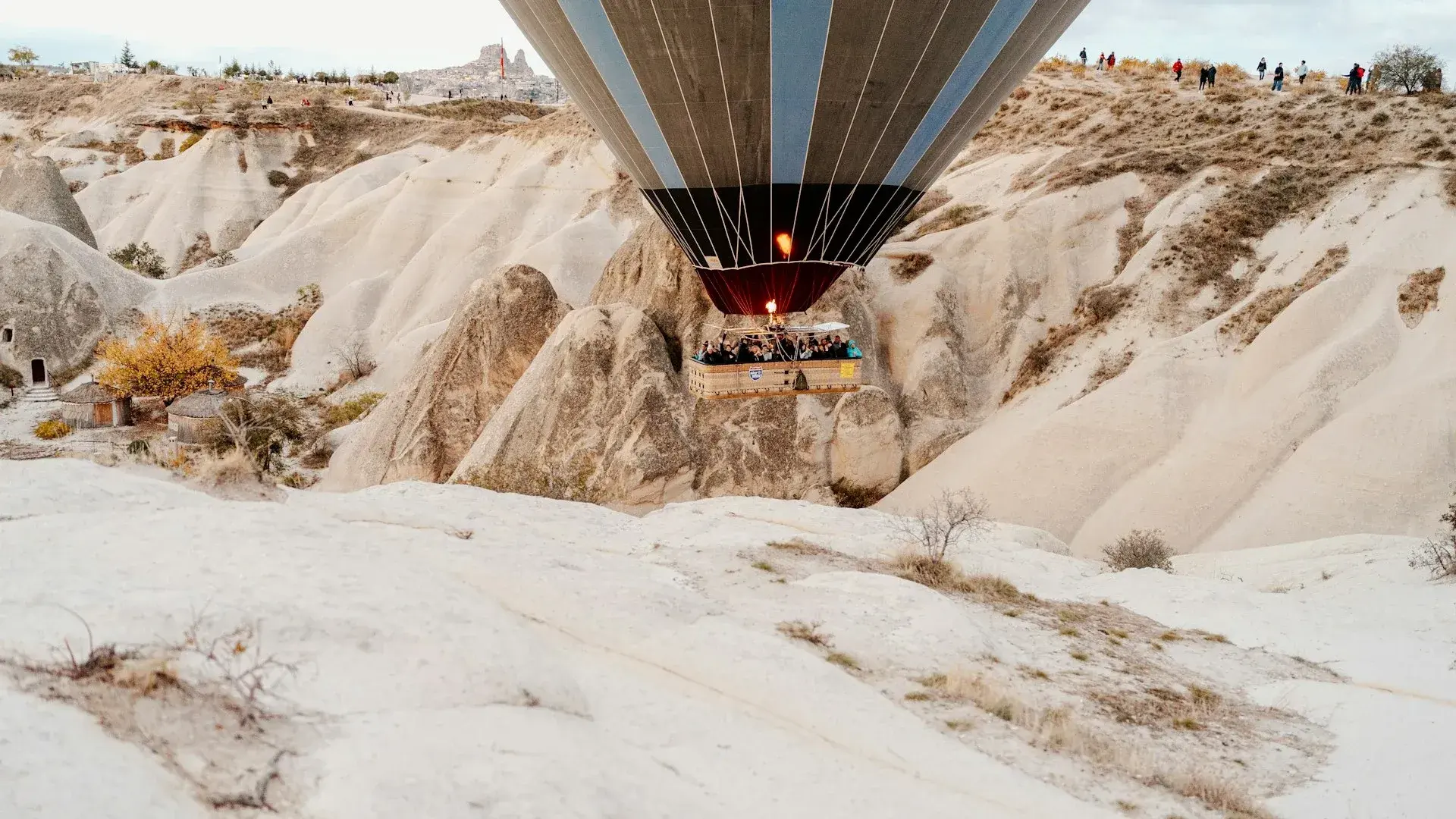
Cappadocia is the coldest stop in this guide: January days around 4°C and nights below freezing. Snow usually comes between December and February, and a white Göreme under a clear morning sky is the picture most winter visitors come for. The valleys are quiet, but trails turn muddy or icy — keep the walks short and wear proper boots.
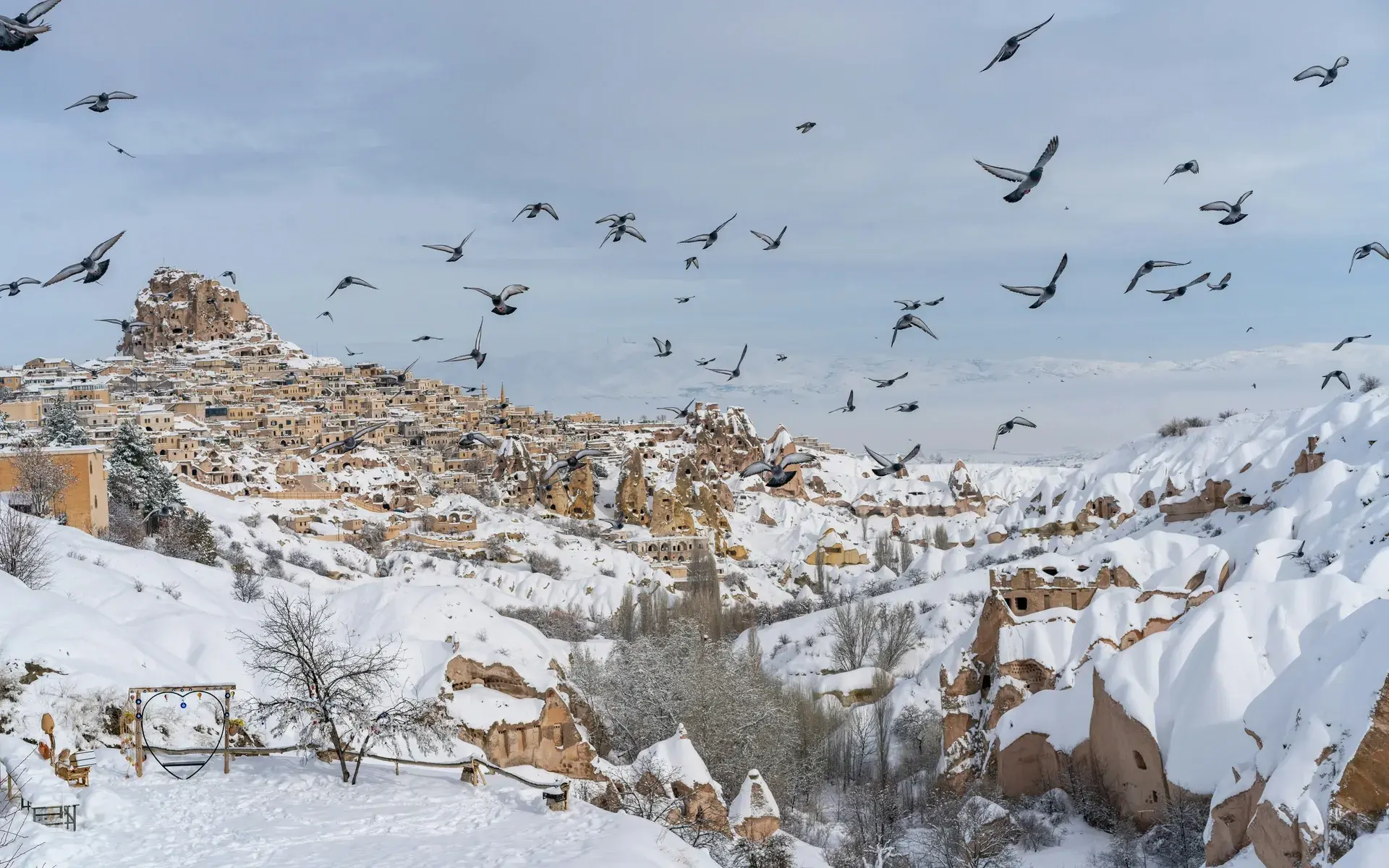
Balloons fly all year, but winter mornings are cancelled more often: the Directorate General of Civil Aviation (SHGM) decides at dawn, and wind, fog or heavy snowfall keep the fleet on the ground. Give yourself two or three mornings rather than one, and dress for sub-zero temperatures at take-off.
Two airports serve the region: Nevşehir Kapadokya, about forty minutes from Göreme, and Kayseri, a little over an hour. In snow both drives take longer. A fixed-price transfer from Kayseri Airport to a Göreme cave hotel starts at €86 per vehicle — and Kayseri is also the airport for Erciyes, so skiing and balloons fit into one trip.
Skiing in Turkey: Uludağ, Erciyes, Palandöken
Turkey's ski resorts sit on the high ground of Anatolia and open when there is enough snow — the dates move every year, so check with the resort before you buy lift passes. These are the four that visitors most often combine with a city trip.
Uludağ, above Bursa, is Istanbul's classic ski weekend. From central Istanbul it is roughly 180 km: about two and a half hours to Bursa over the Osmangazi Bridge, then close to an hour up the mountain road to the hotel zone — longer when it snows. Bursa's cable car also climbs from the city to the mountain, so a ski day can end with İskender kebab in town.
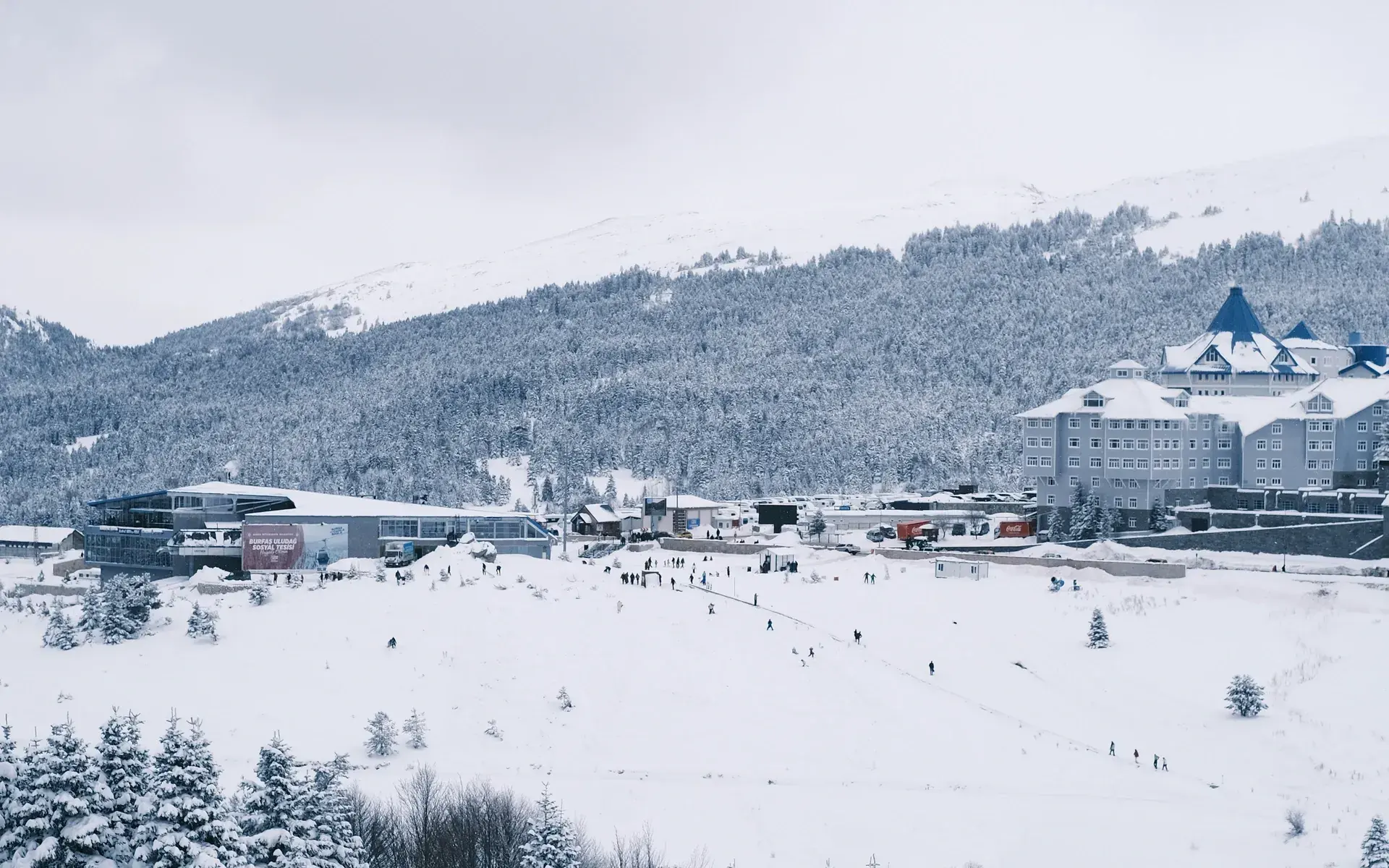
Erciyes, about 25 km from Kayseri on the slopes of the Erciyes volcano, is the most modern of the four. Kayseri Airport is under an hour away and Göreme about an hour and a half — the natural way to pair skiing with Cappadocia.
Palandöken, above Erzurum in the east, is the highest and coldest, known for its dry snow; Erzurum Airport is around half an hour from the slopes. Closest to Istanbul is Kartepe above İzmit — small, but about two hours away, near enough for a single day on the snow.
We do not sell ski packages or lift passes — we drive you door to door. Mention your ski or snowboard bags when you book so the vehicle has room for them; the fare to Uludağ, Erciyes or Palandöken is calculated as soon as you enter your hotel in the booking form.
Uludağ ski transfer · Istanbul to Bursa · Bursa day tour with a driver
Antalya and the Aegean: mild, not beach weather
The Mediterranean coast is the mildest corner of Turkey in winter: Antalya averages around 15°C by day in January and February, with sunny spells between rainy days. The sea is cool — a quick dip for the brave, not a beach holiday — and many resort hotels heat their pools. What you get instead is Kaleiçi, the coastal paths and the ancient sites around Antalya without summer queues.
The Aegean is a couple of degrees cooler — İzmir averages around 13°C — and Ephesus in winter is the site at its emptiest. Pamukkale's travertines are fed by warm springs all year, so the Antique Pool is one swim that works in January.
Things to do in Antalya · Istanbul to Ephesus · Pamukkale from Istanbul
The Black Sea in snow
Trabzon itself is mild — around 11°C by day — but the mountains behind it turn white. Uzungöl and the Ayder plateau under snow feel like a different country from the coast, about two hours from Trabzon Airport. Some high plateau roads close after heavy snowfall, so keep the day flexible and travel with a driver who knows the road.
Practical winter notes
Clocks. Turkey stays on UTC+3 all year. When Europe turns its clocks back at the end of October, the gap grows by an hour: two hours ahead of Berlin or Paris, three ahead of London.
Roads. Snow and ice slow the mountain roads to Uludağ, Erciyes and Göreme; leave an extra hour before a flight on a snowy day. A transfer fare is agreed when you book and does not change with the weather.
Packing. Layers and a waterproof jacket for Istanbul and the coasts; real winter clothing — hat, gloves, boots with grip — for Cappadocia and the ski resorts.
Which winter Turkey is yours?
Pick by what you want from the season rather than by the map:
- 1
City and culture: Istanbul for three or four days — museums, ferries, hammams — with New Year's Eve if your dates fit.
- 2
Snow without skis: Cappadocia for two or three nights, so you have more than one balloon morning.
- 3
Skiing: Uludağ for a weekend from Istanbul, Erciyes paired with Cappadocia, or Palandöken for the coldest, driest snow.
- 4
Mild sun: Antalya and the Aegean — walks, old towns and ancient sites without the summer crowds.